
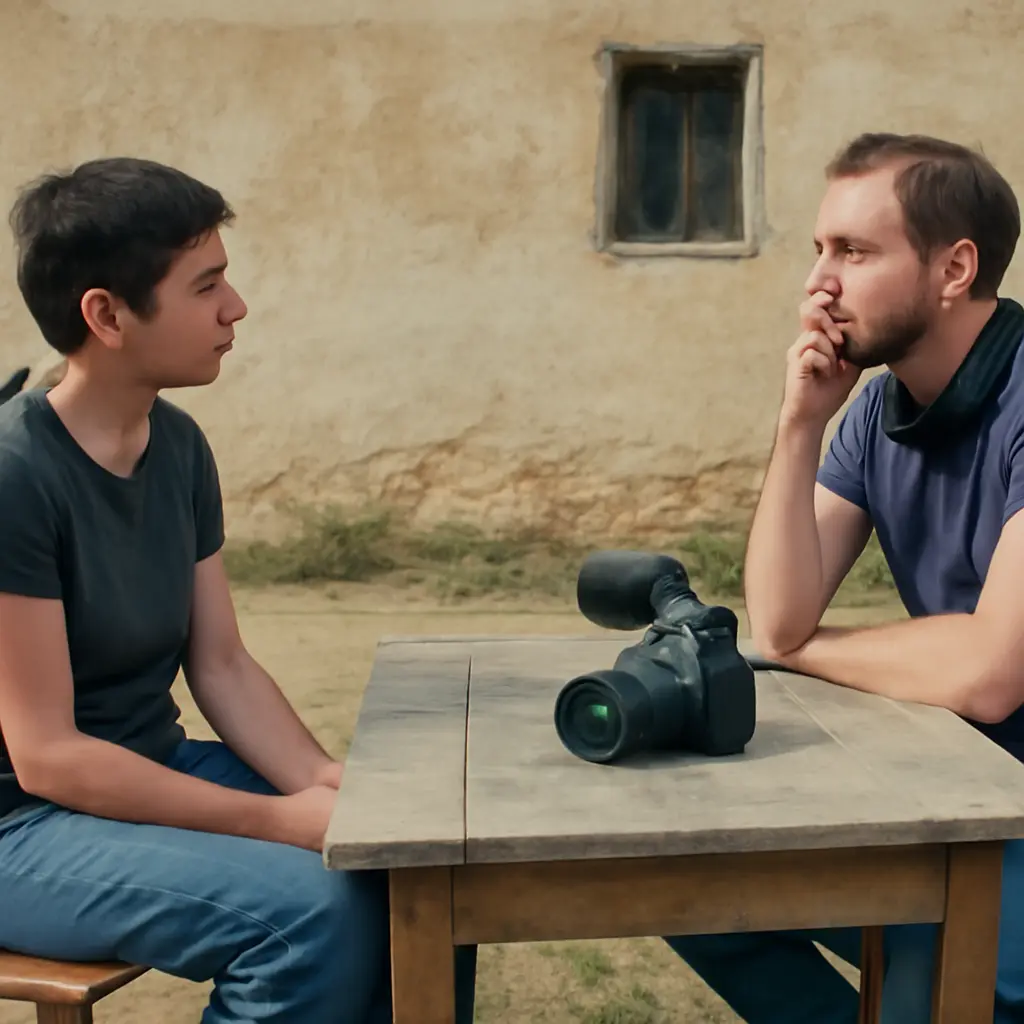
Documentary trust is the working relationship that lets a filmmaker ask difficult questions while a participant retains meaningful control over their own choices. Building it fast enough for useful footage does not mean rushing intimacy: it means explaining the project clearly, listening before filming, agreeing on boundaries, and showing through consistent conduct that those boundaries matter. Guidance from the Oral History Association and documentary-ethics organizations supports informed consent, transparency, and ongoing communication; research on interviewing also underscores the value of open-ended questions and attentive listening. These practices can make limited filming time more productive without promising a participant a particular outcome or sacrificing editorial independence.
Establishing documentary trust through transparency and consent
For documentary work, trust is not simply a participant’s friendliness toward a filmmaker. It is a reasonable expectation that the filmmaker will represent the project honestly, respect agreed boundaries, and communicate about foreseeable risks. The Oral History Association’s Principles and Best Practices emphasize informed consent, respect, and clarity about how recordings may be preserved and used. Documentary filmmakers can apply the same principles while recognizing that consent is an ongoing process—not just a signature obtained before the camera starts rolling.
The practical test is whether a participant understands who is making the film, why they are being approached, what may happen to the footage, and what choices remain theirs. Short production schedules make this clarity more important, not less: a camera can record a moment quickly, but a participant may live with its consequences for years. A useful visual summary for a production team is a consent timeline showing the first approach, pre-interview, filming, sensitive-topic check-ins, and any agreed follow-up.
Informed consent as an ongoing process
Informed consent means giving people understandable information before they decide to participate and revisiting that understanding when circumstances change. Explain the film’s purpose, likely audience, distribution plans, recording methods, and any limits on a participant’s ability to withdraw material after editing or release. Avoid implying that participation guarantees favorable treatment, payment, anonymity, or final approval unless those terms are genuinely part of the agreement.
The Oral History Association recommends discussing the intended use and preservation of interviews and obtaining permission in a way that reflects the narrator’s understanding. In documentary practice, the equivalent is to use plain language, invite questions, and check comprehension rather than relying on a release form alone. If a story involves legal exposure, trauma, immigration status, health, or personal safety, explain relevant risks and consider whether specialist advice or additional safeguards are needed.
Transparency about the filmmaker’s role
Transparency means accurately describing the filmmaker’s relationship to the subject and the project. Say whether you are working independently, for a broadcaster, for an advocacy group, or on a commissioned film; disclose relevant personal connections or conflicts; and distinguish what you know from what you hope to discover. If funding, distribution, or editorial plans are uncertain, say so instead of presenting possibilities as settled facts.
This matters because participants may infer that a filmmaker can secure help, change policy, protect them from scrutiny, or control the final cut. The Documentary Accountability Working Group’s ethical guidance stresses honesty about the filmmaker’s intentions and the relationship with participants. A clear explanation can reduce false expectations while still leaving room for genuine collaboration and difficult, independent reporting.
Earning documentary trust through listening and respectful interviews
Once the project has been explained, trust develops through the quality of the encounter. A participant is more likely to speak meaningfully when the filmmaker listens without treating the interview as a checklist. This does not require agreement with every claim. It requires curiosity, careful follow-up, and a fair opportunity for people to explain what events mean to them.
Open-ended questions and active listening
Open-ended questions invite a person to describe experiences in their own terms. Questions such as “What happened next?” or “How did that affect your family?” generally offer more room than questions that assume an answer. The interviewer can then reflect back key points, ask for clarification, and allow pauses rather than filling every silence.
The Centers for Disease Control and Prevention’s guidance on qualitative interviewing describes open-ended questions and attentive follow-up as useful ways to elicit detailed responses. In practice, a short pre-interview can help identify the participant’s preferred terminology, important context, and subjects they do not wish to discuss. It also helps the filmmaker prepare focused questions instead of using the camera time to discover basic facts.
Cultural humility and power awareness
Cultural humility is an ongoing willingness to examine assumptions and recognize that a filmmaker’s status, resources, language, or institutional affiliation may shape the conversation. It is especially relevant when documenting communities affected by unequal access to media, public services, or legal protection. Ask how a participant wants names, identities, places, and community relationships described; do not assume that one person speaks for an entire group.
The Society of Professional Journalists’ Code of Ethics calls on journalists to minimize harm and show compassion toward people who may be affected by coverage. For documentary teams, that principle can be translated into practical choices: use interpreters where needed, explain unfamiliar production procedures, avoid pressuring participants to perform emotion, and check whether filming could expose someone to retaliation or stigma. These steps do not eliminate power differences, but they make them more visible and manageable.
Protecting documentary trust through boundaries and care
Listening creates an opportunity for disclosure, but disclosure is not permission to use every detail in every way. Trust depends on managing sensitive material with care and distinguishing a compelling scene from a responsible one. Ethical safeguards should be tailored to the person, setting, and foreseeable consequences rather than applied as a generic checklist.
Trauma-informed filming and participant choice
Trauma-informed practice recognizes that recounting distressing events can be difficult and that a participant may need choices about timing, setting, breaks, or whether to continue. Before a sensitive interview, explain the likely subject matter, agree on a pause signal, and make clear that the participant can decline a question. If someone becomes distressed, stop recording, check what they want, and avoid treating visible emotion as proof of authenticity.
The Dart Center for Journalism and Trauma provides guidance for reporting on traumatic events, including the importance of preparation, respectful interviewing, and attention to safety. These practices are not a substitute for mental-health care, and filmmakers should not present themselves as therapists. Where appropriate, offer information about support resources without making participation conditional on accepting help.
Privacy, safety, and limits of confidentiality
Privacy planning means identifying what could make a participant recognizable or vulnerable, including names, faces, locations, workplaces, family details, and distinctive background images. Explain the difference between anonymity and confidentiality: a film may disguise a face or voice, but cannot guarantee that an audience will never infer a person’s identity. Discuss foreseeable distribution and online circulation, especially when footage could be copied or viewed outside its original context.
The Committee to Protect Journalists’ safety resources emphasize assessing risks to sources and journalists, particularly in high-risk environments. Documentary teams can make that assessment concrete by considering who might see the film, what they could learn, and what harm could follow. If risk changes during production, revisit consent and protection plans rather than assuming the original agreement covers new circumstances.
Applying documentary trust practices under production pressure
Fast production often means limited access, compressed schedules, and pressure to capture scenes before they disappear. A simple routine helps teams move efficiently without confusing speed with trust. The aim is not to eliminate uncertainty; it is to make commitments clear, keep communication open, and avoid asking participants to bear risks they do not understand.
A practical first-meeting sequence
- Introduce yourself and explain the project, your role, and what is not yet decided.
- Describe recording, intended use, likely distribution, and any meaningful limits on withdrawal or anonymity.
- Ask what the participant wants to know, what they hope the film will understand, and what concerns them.
- Discuss boundaries, safety, preferred names and terminology, and how to pause or stop filming.
- Confirm the next step without pressuring the person to decide immediately.
A first meeting does not need to produce a dramatic scene to be productive. A participant who chooses to continue after receiving clear information is in a better position to make a considered decision. Document the agreed practical details, share a contact method, and follow through when promised; reliability between filming days is often as important as conduct on camera.
Case example: oral history and community documentation
Oral-history projects offer a useful model because they commonly address memory, identity, and community experience over extended interviews. The Oral History Association’s best-practice framework asks practitioners to explain the project, obtain informed permission, and consider how recordings will be preserved and accessed. A documentary crew adapting this approach might first conduct an off-camera conversation, agree on sensitive topics, then record only after the participant understands the project’s purpose and likely uses.
The example also shows why trust cannot be measured by the volume of disclosure. A participant may choose to share a detailed account, keep some experiences off the record, or revise what they are comfortable discussing as filming proceeds. Respecting those choices can produce a more credible relationship, even when it means losing a scene or changing the production plan.
Conclusion: documentary trust is built through repeatable choices
Building trust quickly enough for meaningful documentary footage depends on transparency, ongoing consent, attentive listening, cultural humility, and careful protection of boundaries. The Oral History Association, the Dart Center, the Society of Professional Journalists, and the Committee to Protect Journalists each offer guidance relevant to these responsibilities. Together, their principles point to a practical lesson: explain the project plainly, ask rather than assume, and keep honoring the participant’s choices after the camera is running.
For filmmakers, the next step is to create a short, project-specific consent and safety checklist before recruitment begins, then revisit it as access, distribution, or risk changes. Trust is not a shortcut to emotional footage; it is the basis for making documentary work more humane, accurate, and worthy of the people whose lives it records.
Sources: Oral History Association, Principles and Best Practices, https://oralhistory.org/principles-and-best-practices-revised-2018/; Documentary Accountability Working Group, Documentary Accountability Working Group, https://www.documentaryaccountability.org/; Centers for Disease Control and Prevention, Qualitative Interviewing, https://www.cdc.gov/healthyyouth/evaluation/pdf/brief25.pdf; Society of Professional Journalists, SPJ Code of Ethics, https://www.spj.org/ethicscode.asp; Dart Center for Journalism and Trauma, Trauma & Journalism, https://dartcenter.org/; Committee to Protect Journalists, Journalist Security Guide, https://cpj.org/reports/2012/04/journalist-security-guide/