
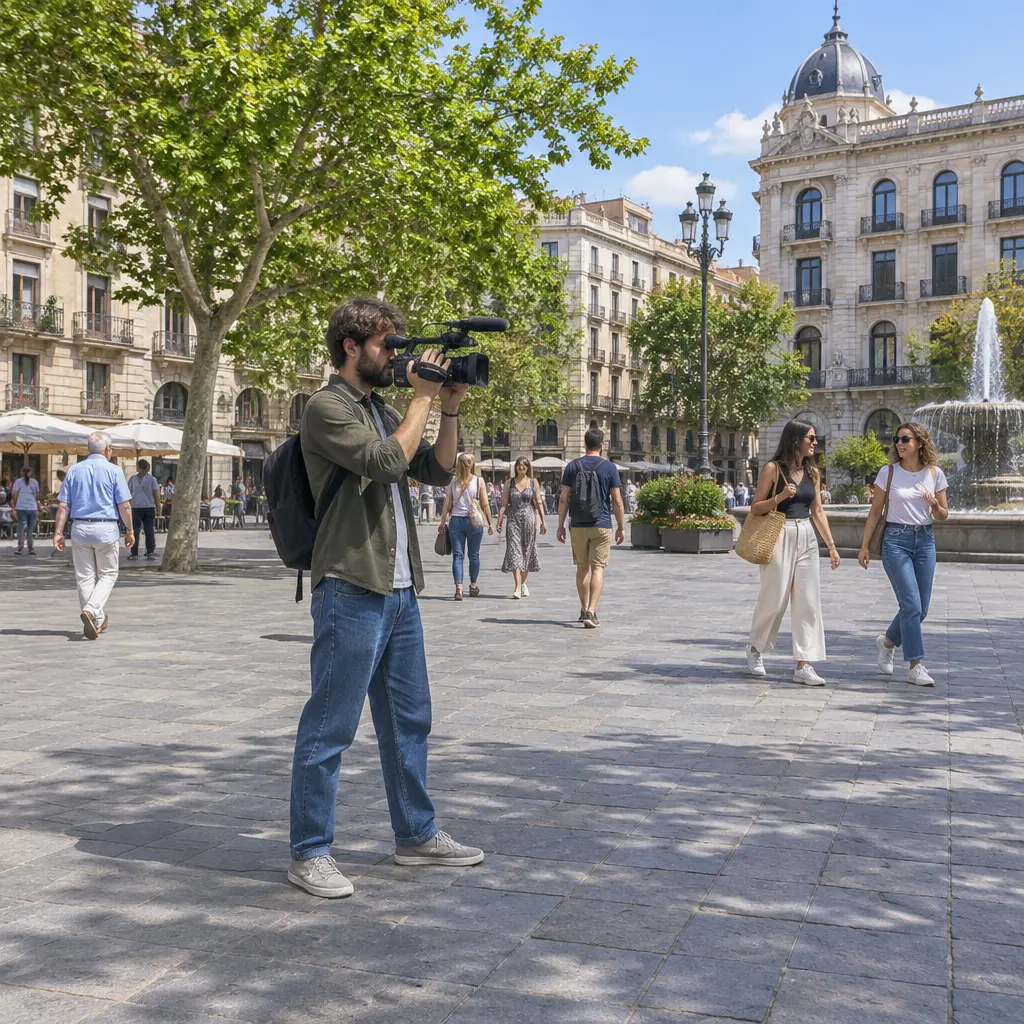
Videojournalism is the reporting and communication of news through moving images, sound, and journalistic context. Its core principles are accuracy, fairness, independence, transparency, and visual storytelling: journalists must verify what they show, provide enough context for audiences to understand it, and make clear when footage has been altered or staged. These standards matter as video circulates rapidly across social platforms: the Reuters Institute for the Study of Journalism’s 2024 Digital News Report found that 66% of surveyed respondents encountered online video news weekly, making trustworthy production and clear verification increasingly consequential.
Videojournalism standards establish accuracy and public trust
Videojournalism standards are the ethical and professional principles that guide how journalists gather, record, edit, and publish visual news. The Radio Television Digital News Association (RTDNA) frames its ethics guidance around truth, accuracy, fairness, independence, accountability, and transparency. In practice, these principles apply to every stage of a story—from deciding whether to film a vulnerable person to checking a clip’s origin and explaining an edit.
Video can feel like direct evidence, but a camera records only a limited view at a particular moment. The frame, microphone placement, sequence, captions, and omissions all shape what viewers understand. The Associated Press’s news values and principles therefore stress that material must not be distorted and that images should not mislead audiences. The related practices of verification, context, and visual accuracy turn broad ethical commitments into repeatable newsroom methods.
Accuracy and verification
Accuracy means that a video’s content, caption, date, location, and stated circumstances are checked before publication. Verification is the process of establishing where footage came from and whether it depicts the event claimed. Journalists can compare a source’s account with independent witnesses, original files, landmarks, weather, public records, and other available footage. Reuters’ Handbook of Journalism emphasizes that user-generated material must be authenticated and that its context must be established.
A practical example is a dramatic clip shared during breaking news. Before identifying it as footage of a current event, a newsroom should investigate whether it appeared online earlier, whether visible signs match the claimed location, and whether the source can explain how it was recorded. Verification does not guarantee that every detail is known; when uncertainty remains, journalists should state what has and has not been confirmed.
Fairness, independence, and accountability
Fairness requires giving audiences a sufficiently representative account and treating sources with care, while independence means resisting pressure from subjects, sponsors, political actors, or personal interests. Accountability means correcting material errors openly and explaining significant editorial decisions. RTDNA’s code links these duties to journalists’ responsibility to serve the public rather than merely attract attention.
These principles are especially important when footage shows allegations, conflict, or people in distress. A reporter should seek relevant responses, avoid implying guilt through selective sequencing, and consider whether identifying a source could expose that person to harm. A correction should be prompt and visible enough for people who saw the original item to understand what changed.
Visual storytelling gives videojournalism its reporting method
Visual storytelling is the use of images, natural sound, interviews, narration, and sequence to explain a news event. It is not decoration added to a written report: pictures and sound should contribute evidence or meaning, while narration and captions supply context that viewers cannot infer safely from images alone. The National Press Photographers Association (NPPA) states that visual journalists should be accurate and comprehensive in representing subjects and should not intentionally manipulate images or sound in ways that mislead.
A useful production plan connects each scene to a reporting purpose. Establishing shots show where the story takes place; close-ups can reveal relevant detail; interviews provide testimony; and natural sound conveys the environment. Together, these elements help viewers follow a story, but none substitutes for verification. Good visual reporting also acknowledges what the camera cannot show, including events outside the frame and information that requires documentary or expert confirmation.
Composition, sound, and sequence
Composition is the arrangement of visual elements within the frame; sound includes spoken words and environmental audio; sequence is the order in which shots and information appear. These choices affect clarity and emphasis. For example, a wide shot may establish a crowd’s size, while a closer shot may document a specific interaction. Editors should preserve the meaning of statements and avoid joining unrelated moments in a way that implies they occurred together.
Captions and on-screen labels are part of the evidence viewers use to interpret a clip. They should identify people and locations only when verified, distinguish archival material from current footage, and avoid presenting estimates as established counts. When a chart or graphic is used to explain a trend, its source, time period, and units should be stated clearly.
Editing and visual integrity
Editing selects and arranges recorded material into a coherent report. Ethical editing improves clarity without changing the substance of events or testimony. Removing pauses may be acceptable when it does not change a speaker’s meaning; combining statements from separate moments without disclosure can create a false impression. The NPPA’s code cautions against altering the content or context of images in ways that mislead.
Newsrooms should distinguish routine technical adjustments—such as correcting exposure—from substantive alterations that change what appears to have happened. Generative tools and synthetic media add further risks: fabricated images, cloned voices, or AI-generated scenes should never be presented as documentary evidence. If an illustration or reconstruction is used, label it plainly and explain its basis.
Videojournalism field practice protects sources and evidence
Field practice covers the decisions made while planning, filming, interviewing, and handling recorded material. It connects ethical principles to the realities of location reporting, where safety, consent, privacy, and source protection can affect what journalists can responsibly capture. The Committee to Protect Journalists’ safety resources emphasize preparation, risk assessment, and precautions tailored to the assignment.
A field journalist should plan not only what images would make a compelling report, but also what risks filming may create for sources, bystanders, and the reporting team. In sensitive settings, publishing a face, voice, uniform, location, or identifying background detail can expose someone to retaliation. The editorial decision should balance public interest against foreseeable harm.
Interviewing and informed participation
An interview is a recorded exchange intended to obtain information, testimony, or perspective. Ethical interviewing requires accurate representation of what a person says and care in explaining the journalist’s role, especially when a subject may not understand where or how the video will be distributed. Consent is not always legally required in public settings, but meaningful explanation and respectful treatment remain important professional considerations.
Questions should be open enough to elicit a source’s account and precise enough to clarify facts. Reporters should avoid coaching answers or promising editorial control they cannot provide. When translating or editing an interview, preserve the speaker’s meaning and disclose material limitations, such as an interpreter’s role or an incomplete recording.
Privacy, safety, and trauma-aware reporting
Privacy and safety decisions concern whether filming or publishing could expose a person to unnecessary harm. This is particularly relevant to children, survivors of violence, people in medical crisis, and individuals whose identity could reveal a protected location. The Dart Center for Journalism and Trauma advises journalists to approach trauma-related reporting with sensitivity and to avoid treating people solely as dramatic material.
A responsible newsroom considers alternatives such as obscuring a face, withholding a name, delaying publication, or describing an event without showing graphic details. These choices should be based on the story’s public value and the risks involved, not on an assumption that the most shocking footage is automatically the most informative.
Digital distribution makes verification and transparency essential
Digital distribution is the publication and circulation of video through websites, social platforms, messaging services, and other online channels. The Reuters Institute’s 2024 Digital News Report surveyed audiences in 47 markets and reported that 66% of respondents encountered online video news weekly. That scale makes clear labeling, source verification, and corrections central to contemporary videojournalism, particularly when clips are reposted outside their original context.
Platform audiences may encounter a short excerpt without the full report, and a clip can travel farther than its original caption. Journalists should therefore make essential context available within the video or its accompanying text, identify archive footage, and avoid headlines that overstate what the pictures establish. Transparency about sourcing and uncertainty helps viewers assess evidence rather than simply react to it.
User-generated video and provenance
User-generated video is footage created by members of the public rather than by a news organization’s staff. It can document events that journalists cannot reach, but its usefulness depends on establishing provenance: who recorded it, when and where, and whether it has been edited or reposted. Reuters and the Associated Press both treat authentication and contextual checks as essential before publishing such material.
A newsroom can preserve the original file, record how it was obtained, contact the creator, and compare the footage with independent evidence. If the origin cannot be confirmed, the report should say so and avoid presenting the clip as definitive proof. A visible watermark or a confident uploader is not, by itself, evidence of authenticity.
Corrections, disclosures, and audience trust
Transparency is the practice of telling audiences what is known, how material was gathered, and where meaningful limitations exist. It includes labeling reconstructions, explaining edits that could affect interpretation, identifying uncertainty, and correcting mistakes. RTDNA’s ethics guidance calls for accountability, while the Associated Press’s standards emphasize prompt correction of errors.
A useful disclosure is specific: for example, it identifies that a clip was supplied by a witness, that a face was blurred for safety, or that a scene is a reconstruction rather than original footage. Corrections should identify the inaccurate claim and provide the corrected information, rather than quietly replacing a video without explanation.
Conclusion: Videojournalism principles sustain credible visual reporting
Videojournalism depends on standards that protect accuracy and public trust, visual storytelling that explains rather than distorts, field practices that safeguard people and evidence, and digital transparency that helps audiences evaluate what they see. The Reuters Institute’s finding that two-thirds of surveyed respondents encounter online video news weekly underscores the reach—and responsibility—of visual reporting.
Journalists, editors, and publishers can put these principles into practice by verifying footage before publication, preserving context through editing, assessing risks to sources, and correcting errors openly. Readers and viewers can support stronger reporting by checking captions and sources, seeking the full context of viral clips, and consulting news organizations’ corrections and standards pages.
Sources: Reuters Institute for the Study of Journalism, Digital News Report 2024, https://reutersinstitute.politics.ox.ac.uk/digital-news-report/2024; Radio Television Digital News Association, RTDNA Code of Ethics, https://www.rtdna.org/ethics; Associated Press, News Values and Principles, https://www.ap.org/about/news-values-and-principles/; Reuters, Handbook of Journalism, https://www.reutersagency.com/en/about/standards-values/; National Press Photographers Association, NPPA Code of Ethics, https://nppa.org/resources/code-ethics; Committee to Protect Journalists, Safety Kit, https://cpj.org/safety-kit/; Dart Center for Journalism and Trauma, Resources for Journalists, https://dartcenter.org/resources.