
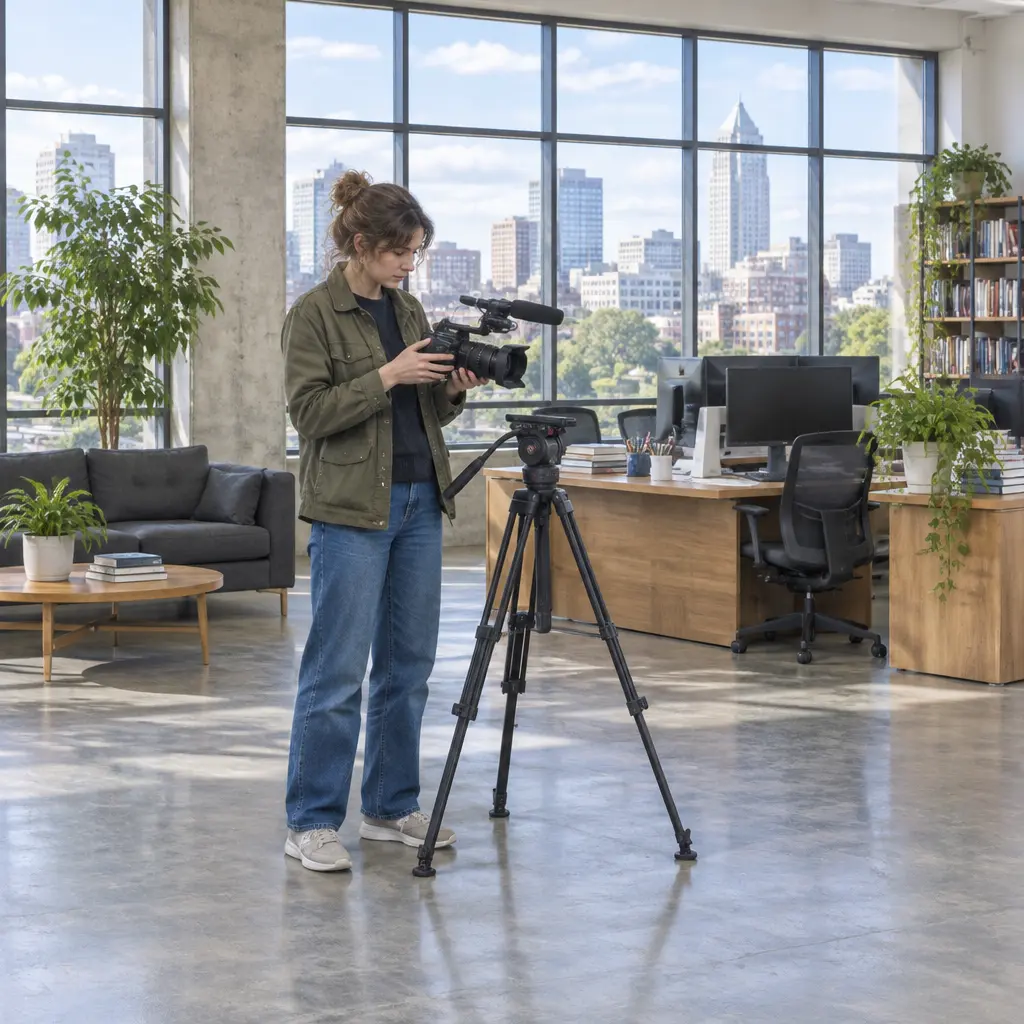
Videojournalism ethics is the set of principles that guides how journalists gather, record, edit, and publish video in the public interest. Learning it early helps videojournalists report accurately while protecting people from avoidable harm. The Society of Professional Journalists’ Code of Ethics calls on journalists to verify information, minimize harm, act independently, and be accountable—principles especially important when images can shape perception quickly and powerfully. This guide explains ethical decision-making, consent and privacy, truthful editing, safety, and accountability, with practical examples and research-based context.
Ethical decision-making builds trustworthy videojournalism
Ethical decision-making is the process of weighing a story’s public value against the foreseeable consequences of gathering and publishing it. The SPJ Code of Ethics defines a useful foundation through four duties: seek truth and report it, minimize harm, act independently, and be accountable and transparent. These are not a substitute for newsroom policy or law; they are principles to apply when those rules do not settle a difficult choice.
The stakes are substantial. The Reuters Institute for the Study of Journalism’s 2024 Digital News Report found that 39% of respondents across its surveyed markets sometimes or often avoid the news. That finding does not prove that unethical video causes news avoidance, but it underscores why trustworthy reporting and clear standards matter to audience confidence.
Public interest and proportionality
Public interest means a credible benefit to the community, such as revealing abuse of authority, documenting a public danger, or informing people about an event that affects them. It is different from mere curiosity. Before filming or publishing, ask what the video adds, who could be harmed, and whether a less intrusive method could establish the same facts.
For example, recording a public official’s conduct during an official duty may have clear accountability value. Showing an unrelated bystander’s face, a child’s distress, or a victim’s identifying details may add little. Cropping, blurring, withholding a clip, or describing an image rather than displaying it can preserve the story while reducing unnecessary exposure.
Verification before publication
Verification means checking that footage is authentic, accurately described, and placed in the right context. A video can be genuine but misleading if it is old, recorded elsewhere, or trimmed to remove what happened before or after the visible moment. The verification process should establish, as far as possible, who recorded it, when and where it was made, whether it has been altered, and whether independent evidence supports its interpretation.
The Associated Press’s standards for user-generated content emphasize verifying material before use and being transparent about what is known. Practical checks include contacting the original source, comparing landmarks and weather with the claimed location, reviewing the full clip, and seeking corroboration from witnesses or reliable records. When verification remains incomplete, label the uncertainty plainly or do not publish the material as fact.
Consent and privacy protect people in videojournalism
Consent and privacy are ethical considerations about a person’s control over participation and exposure. Consent is not simply a signed release: a person should understand the nature of the interview, its likely audience, and how the footage may be used. Privacy concerns are heightened when filming people in vulnerable situations, even when recording is technically lawful.
The Committee to Protect Journalists’ safety resources advise journalists to assess risks to sources and take steps to protect them. That principle applies to both physical and digital exposure: a face, voice, uniform, address, or background detail may identify someone who expected anonymity or could face retaliation.
Informed consent and power imbalance
Informed consent means explaining the reporting purpose and relevant publication context in language the participant can understand. It is particularly important when interviewing children, people in custody, patients, survivors of violence, or people affected by crisis. A person’s agreement may be less meaningful if they are frightened, dependent on the journalist, unable to understand the consequences, or pressured by someone else.
Consent does not remove the journalist’s duty of care. A participant may agree to appear without anticipating that a clip will circulate widely or reveal their identity to dangerous people. Reassess risk before publication, especially when circumstances change. When appropriate, use a guardian’s permission alongside the child’s assent, avoid unnecessary identifying details, and explain any limits on anonymity rather than promising protection the newsroom cannot guarantee.
Privacy, vulnerable subjects, and trauma
Minimizing harm means treating people with compassion without suppressing important facts. The Dart Center for Journalism and Trauma recommends trauma-informed approaches that give interviewees clear information, respect their agency, and avoid needless pressure. A journalist can ask whether filming is appropriate, offer a pause, and avoid repeatedly demanding graphic details merely to obtain a more emotional clip.
In a disaster or crime scene, consider whether showing a victim’s face, medical treatment, or identifiable family members is necessary to explain the event. The answer may differ depending on the public value, the person’s wishes, and the risk of further harm. Ethical judgment requires considering the image’s likely impact—not only on the subject, but also on relatives and viewers.
Editing and visual context preserve truthful meaning
Ethical editing preserves the meaning of recorded events and makes clear when images are illustrative, reconstructed, or altered. Editing choices—including shot order, duration, captions, sound, and cropping—can change what viewers believe happened. The NPPA Code of Ethics cautions visual journalists against intentionally contributing to, altering, or influencing events, and against manipulating images in ways that mislead the public.
This does not mean every cut is unethical. A shorter sequence can be accurate if it does not omit essential context or imply a false chronology. The key test is whether a reasonable viewer would understand the event differently because of the edit.
Editing, captions, and sound
A truthful edit distinguishes what the camera recorded from what the journalist infers. Do not combine separate moments to suggest they occurred continuously, use reaction shots to imply a response that did not happen, or add sound that changes the apparent atmosphere. Captions should identify people and places only when verified; an incorrect caption can turn authentic footage into misinformation.
Consider a protest video in which a brief confrontation is followed by a peaceful crowd. Publishing only the confrontation may create a distorted impression of the entire event. A responsible report can still show the incident, but should explain its duration, location, and relationship to the broader gathering when those facts are known.
Archives, composites, and illustrative footage
Archival footage is previously recorded material used to provide historical or explanatory context. It should be labeled so audiences do not mistake it for current video. Likewise, staged demonstrations, reenactments, stock footage, and illustrative shots should be disclosed clearly and should not be presented as direct documentation of the event being reported.
Digital alteration requires particular care. Corrections such as color balancing for visibility may be acceptable under newsroom rules, while removing objects, adding elements, or generating a scene can misrepresent reality. If an image has been materially altered, explain what changed and why; if disclosure cannot prevent misunderstanding, do not use it as documentary evidence.
Safety and accountability sustain ethical reporting
Safety and accountability extend ethical practice from the moment of reporting through publication and correction. Videojournalists may work near violence, disasters, demonstrations, or hostile online attention. A compelling image is never worth an avoidable risk to a journalist, source, or bystander.
The Committee to Protect Journalists documents risks faced by journalists worldwide, including physical attacks, detention, and digital threats. Its reporting demonstrates why safety planning should be part of editorial preparation rather than an afterthought. Risk varies by assignment and location, so teams should assess conditions, communication plans, protective equipment, and exit routes before deployment.
Field safety and digital security
Field safety includes situational awareness, appropriate training, reliable check-ins, and a plan to leave when conditions deteriorate. Do not obstruct emergency responders or put subjects at risk to obtain footage. In conflict or protest settings, consider how a camera may identify participants and whether metadata, live transmission, or visible equipment could expose a source.
Digital security includes protecting devices, footage, accounts, and communications from unauthorized access. Store sensitive material securely, limit access to people who need it, and discuss secure transfer methods with vulnerable sources. These steps do not guarantee safety, but they reduce preventable exposure.
Corrections, transparency, and review
Accountability means explaining decisions, correcting errors promptly, and giving audiences a way to raise concerns. If a caption misidentifies someone or a sequence creates a false impression, correct the record visibly rather than quietly replacing the file. If footage is withheld to protect a source or avoid graphic harm, a brief explanation can help readers understand the editorial choice.
A simple pre-publication review can strengthen accountability: verify the footage and caption; check whether edits preserve chronology; assess privacy and safety risks; confirm labels for archival or illustrative material; and document unresolved uncertainty. This checklist turns broad ethical principles into repeatable newsroom practice.
Conclusion: Make ethics part of every assignment
Videojournalism ethics begins with public-interest judgment and verification, then carries through consent, privacy, editing, safety, and accountability. The SPJ, NPPA, AP, CPJ, and Dart Center guidance converges on a practical lesson: powerful images require careful reporting and proportionate choices. Videojournalists should learn these habits early, discuss difficult cases with editors and colleagues, and revisit newsroom standards as technology and publication practices change. Before the next assignment, use a verification and harm-review checklist—and be prepared to explain why each image belongs in the story.
Sources: Society of Professional Journalists, SPJ Code of Ethics, https://www.spj.org/ethicscode.asp; Reuters Institute for the Study of Journalism, Digital News Report 2024, https://reutersinstitute.politics.ox.ac.uk/digital-news-report/2024; Associated Press, AP News Values and Principles, https://www.ap.org/about/news-values-and-principles/; Committee to Protect Journalists, Safety Advisory: Covering Protests, https://cpj.org/2020/05/safety-advisory-covering-protests/; Dart Center for Journalism and Trauma, Trauma & Journalism, https://dartcenter.org/resources/trauma-journalism; National Press Photographers Association, NPPA Code of Ethics, https://nppa.org/code-ethics